
Skip to product information


Alocasia Nobilis
Regular price
₹ 2,599.00
Sale price
₹ 1,399.00
The Alocasia Nobilis (scientifically classified as a choice cultivar of Alocasia sanderiana) is a dramatic, fiercely architectural masterpiece. Known colloquially as the Noble Alocasia or "Kris Plant," this rare tropical treasure instantly commands authority with its razor-sharp outlines and intense geometric presence.
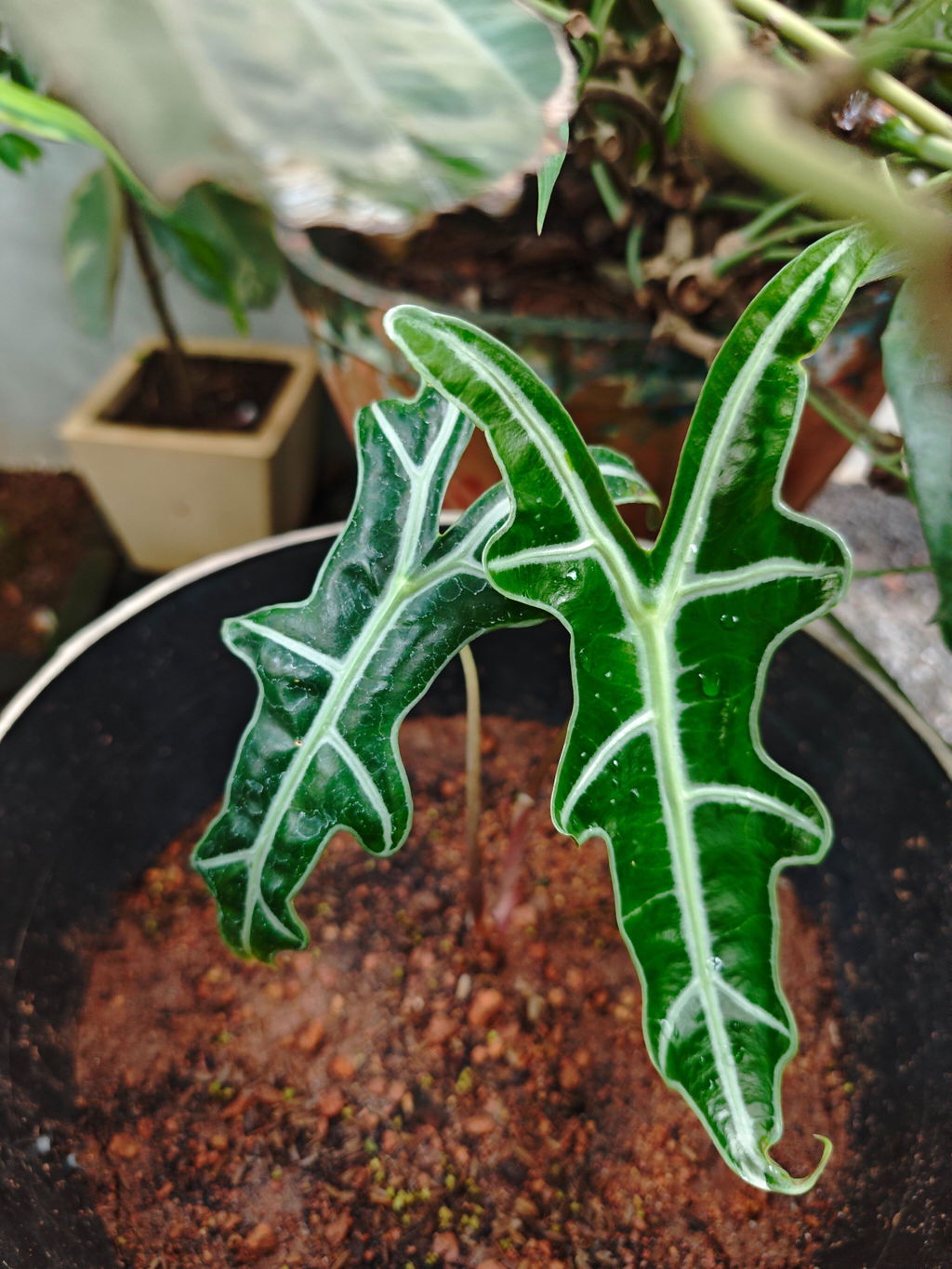
Setting itself completely apart from standard elephant ears, the Nobilis features heavily elongated, ultra-narrow arrowhead leaves. The deeply cut, heavily scalloped, and wavy margins elegantly mimic the legendary blade of a Southeast Asian Kris dagger, presenting a highly structural silhouette for elite indoor plant galleries.
Dagger-Like Outline & Metallic Sheen
The defining asset of the Nobilis is its deeply notched, sinuous leaf architecture. The glossy, deep metallic-green canvas is heavily broken up by thick, luminous silvery-white veins that slice through the foliage, beautifully finished by a rich purple-maroon underside.
Stately, Upright Growth Habit
Unlike heavy, drooping foliage varieties, this noble cultivar holds its sculpted daggers proudly aloft on stiff, vertical petioles. It grows into a magnificent living sculpture that perfectly grounds minimalist tabletops, bright display corners, or plant stands.
Caution: Toxic to Pets
Like all premium members of the Alocasia family, the Nobilis contains insoluble calcium oxalate crystals. Chewing or ingesting any part of the leaves or stems will cause immediate oral burning, swelling, and sharp stomach discomfort in dogs and cats. Keep it safely elevated out of reach.
Light
▾
Requires consistent, medium to bright, indirect filtered light to fuel the growth of its heavily indented leaves and keep the silver veins looking clear. Strictly protect it from harsh, direct afternoon solar rays, which will quickly bleach the dark foliage and burn the delicate, jagged tips.
Watering
▾
Allow the top 50% to 60% of the soil mix to dry out fully before providing a thorough deep soak. Alocasias store moisture efficiently in their short tuberous stems and are highly vulnerable to root suffocation from stagnant mud. Always ensure your pot has sharp, instant drainage holes.
Soil & Humidity
▾
Thrives beautifully in elevated humidity environments (60% or higher) to assist the narrow, jagged lobes in expanding cleanly without tearing. Always pot it in a loose, ultra-chunky aroid mix combining rich peat amended heavily with orchid bark, coarse perlite, and horticultural charcoal.
Size Details
1 Alocasia Nobilis
Size:
(Plant sizes may vary slightly based on seasonal growth, individual plant characteristics, and current stock.)
Shipping & Delivery
We ship plants within 3-4 days after placing the order if we have them in stock. If not, we’ll email you with the details. Learn More
Replacement
If your plant dies during transit, please contact us with proof, including an unboxing video, and we'll replace it for free. Learn More
![Zenas Christian [Gujarat] review photo](https://review-images.judgeme.com/soiled/1754912126__20250809_202746__original.jpg?quality=80&width=1024)
![Zenas Christian [Gujarat] review photo](https://review-images.judgeme.com/soiled/1754912138__20250809_202803__original.jpg?quality=80&width=1024)