Skip to product information


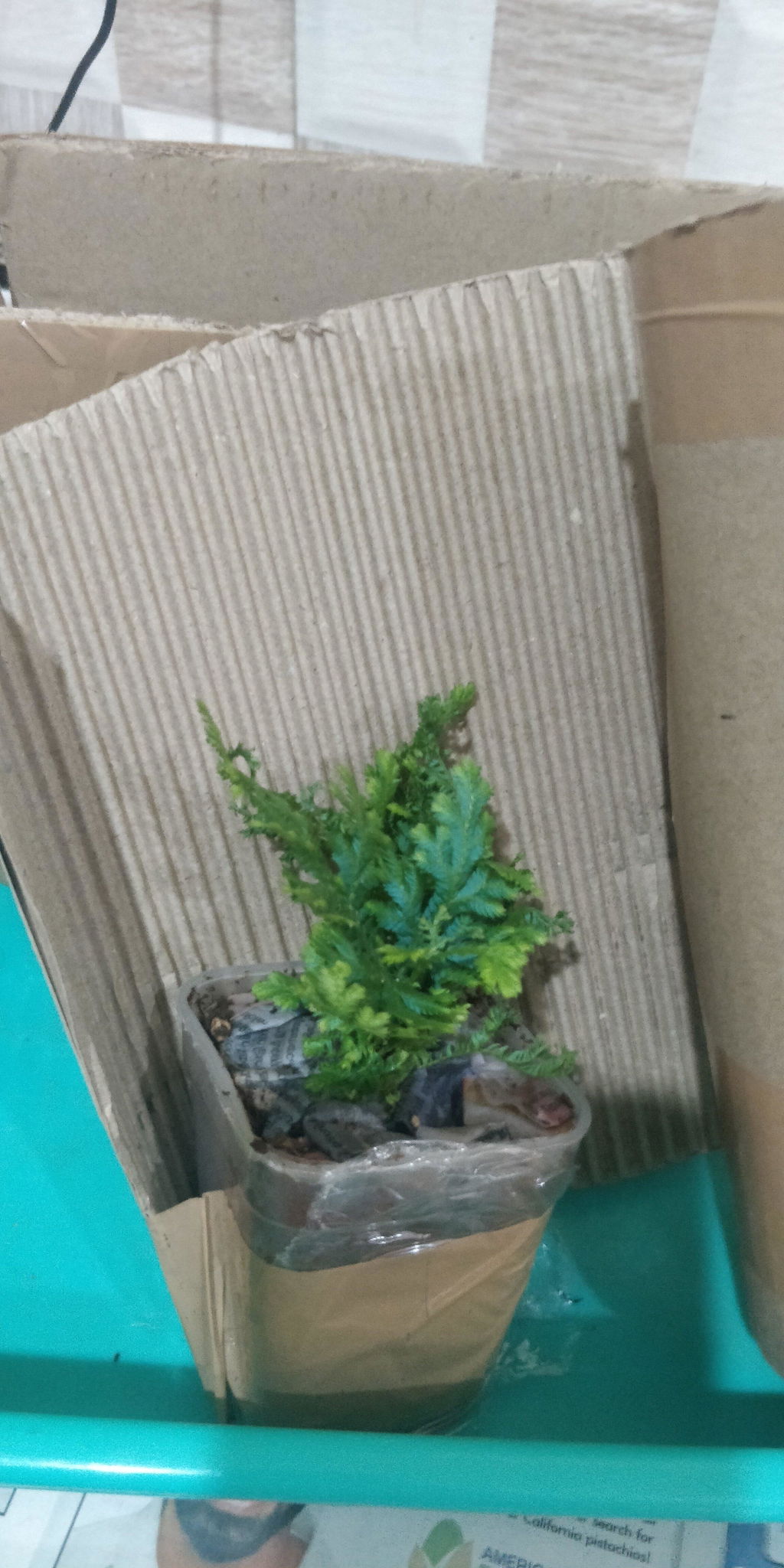
Blue Peacock Fern (Selaginella Willdenowii)
Regular price
₹ 999.00
Sale price
₹ 399.00
The Blue Peacock Fern (Selaginella Willdenowii) is one of the most visually remarkable plants in existence — and one of the oldest. Despite its name, it is not actually a fern at all, but a lycophyte: an ancient lineage of vascular plants that predates the dinosaurs by hundreds of millions of years. What makes it truly extraordinary is its foliage — iridescent, shimmering blue-green fronds that seem to glow from within, shifting and changing colour as the light moves across them, exactly like the feathers of a peacock's tail.
Native to the tropical forests of Southeast Asia — including Malaysia, Indonesia, and India's own northeastern regions — it grows naturally as a low, creeping ground cover on the moist forest floor, spreading outward in a dense, jewel-coloured mat. Indoors, it stays compact at 10–25 cm tall while spreading up to 45–60 cm wide, making it ideal for terrariums, shallow pots, hanging baskets, and shaded balcony spots. The most fascinating characteristic of this species: the blue iridescence is most intense in lower light, making it genuinely one of the few plants that rewards a shadier corner.
💙 The Secret to the Most Vivid Blue Unlike most plants where colour intensifies with more light, the Blue Peacock Fern's iridescent blue shimmer is brightest in lower, indirect light. This is a structural colour produced by the way the leaf cells refract light — not pigment. Bright direct sun actually mutes the effect. A north-facing window or a shaded spot is where this plant looks its most spectacular.
Light▾
Low to bright indirect light — no direct sun. A north or east-facing window is ideal. Tolerates surprisingly low light levels while retaining its blue iridescence (which actually intensifies in shade). Direct sun scorches the delicate foliage quickly. Outdoors, grow in full shade or beneath a dense canopy.
Watering▾
Keep soil consistently and evenly moist — this plant is not drought-tolerant at all. Water when the top 2 cm feels just slightly dry; never let it dry out fully or the fronds will crisp quickly. Water slowly and evenly at the base. In summer, check every 2–3 days. Reduce slightly in winter but maintain consistent moisture. Use room-temperature water — cold water can shock the roots.
Humidity▾
High humidity is essential — 60–90% is the ideal range. This is the most important care requirement. A humidifier is the most reliable solution. Alternatively, grow in a terrarium (ideal), place on a pebble tray with water, or group with other plants. Avoid misting directly onto the foliage as surface moisture encourages fungal issues. Keep away from AC vents, fans, and cold drafts.
Growing Media▾
Moisture-retentive but well-aerated — unlike most plants, drainage is secondary to moisture retention here. A mix of coco coir, peat moss, orchid bark, and a little perlite works well. pH: 5.5–6.5 (slightly acidic). Repot in spring, refreshing the soil even if the pot size stays the same. Shallow roots mean shallow pots or wide trays suit it better than deep containers.
Feeding & Fertilization▾
Very light feeder — fertilizer burn is a real risk. Apply a balanced liquid fertilizer at quarter strength once a month during spring and summer only. Alternatively, enrich the soil with worm castings or compost when repotting. In rich organic soil, additional feeding is often unnecessary. Never fertilize in winter or on dry roots.
🔮 Perfect for Terrariums
The Blue Peacock Fern is one of the best terrarium plants available — the enclosed environment provides the consistent high humidity it loves, and its low creeping habit makes it a stunning blue-green carpet layer in any vivarium or glass terrarium. Ensure the terrarium has adequate ventilation to prevent stagnant moisture, and pair it with other humidity-loving plants like mosses, Fittonia, or small ferns. In a well-maintained terrarium, this plant is virtually maintenance-free.
⚠️ Common Issues & Quick Fixes
Leaves Turning Dry or Crispy▾
The most common issue — caused by low humidity, underwatering, or proximity to AC vents and fans. Boost humidity immediately with a humidifier or by moving to a more humid spot. Water more frequently and ensure the soil never dries out completely. Trim crispy fronds at the base — they will not recover, but new healthy growth will emerge once conditions improve.
Yellow Leaves▾
Usually overwatering or waterlogged soil — check that the pot has adequate drainage and allow the top layer to dry slightly between waterings. Can also indicate overfertilization (fertilizer burn) — flush the soil thoroughly with clean water. If soil drains well and yellowing persists, a light application of half-strength balanced fertilizer may correct a nutrient deficiency.
Loss of Blue Iridescence▾
Too much bright or direct light. Move to a shadier spot — the structural blue shimmer is most vivid in lower, diffused light. This is one of the rare plants where reducing light actually improves appearance.
Leggy or Sparse Growth▾
Insufficient light — even though it's a shade plant, it still needs some indirect light to grow densely. Move slightly closer to a bright window (indirect only). Pinch back long, sparse stems to encourage bushier lateral growth.
Fungal Spots or Rot▾
Usually caused by poor air circulation combined with excess surface moisture. Avoid misting foliage directly. Improve ventilation, remove affected stems, and treat with a diluted fungicide if needed. In terrariums, ensure the lid allows some airflow.
📋 Quick Plant Profile
| Botanical Name | Selaginella willdenowii |
| Common Names | Blue Peacock Fern, Peacock Moss, Willdenow's Spikemoss, Rainbow Moss |
| Plant Type | Lycophyte (not a true fern) — ancient creeping vascular plant |
| Origin | Southeast Asia (Malaysia, Indonesia, Northeast India) |
| Key Feature | Iridescent blue-green foliage — structural colour that shifts with light angle |
| Growth Habit | Low creeping / mat-forming; spreads outward rather than growing tall |
| Mature Size | 10–25 cm tall; 45–60 cm spread |
| Light | Low to Bright Indirect — no direct sun; blue intensifies in shade |
| Watering | Keep consistently moist — not drought-tolerant at all |
| Humidity | 60–90% — humidifier or terrarium strongly recommended |
| Temperature | 18°C–26°C ideal; cold-sensitive below 12°C |
| Ideal For | Terrariums, Shallow Pots, Hanging Baskets, Shaded Balconies |
| Care Level | Easy to Moderate — needs consistent moisture and humidity above all |
Size Details
1 Blue Peacock Fern (Selaginella Willdenowii)
Size:
(Plant sizes may vary slightly based on seasonal growth, individual plant characteristics, and current stock.)
Shipping & Delivery
We ship plants within 3-4 days after placing the order if we have them in stock. If not, we’ll email you with the details. Learn More
Replacement
If your plant dies during transit, please contact us with proof, including an unboxing video, and we'll replace it for free. Learn More