Skip to product information


Hoya Kerrii 'Variegated' (Heart Leaf Hoya)
₹ 1,099.00
Regular price
₹ 1,900.00
Sale price
₹ 1,099.00
🌿 What You Are Buying — A Full Vining Plant, Not a Single Leaf
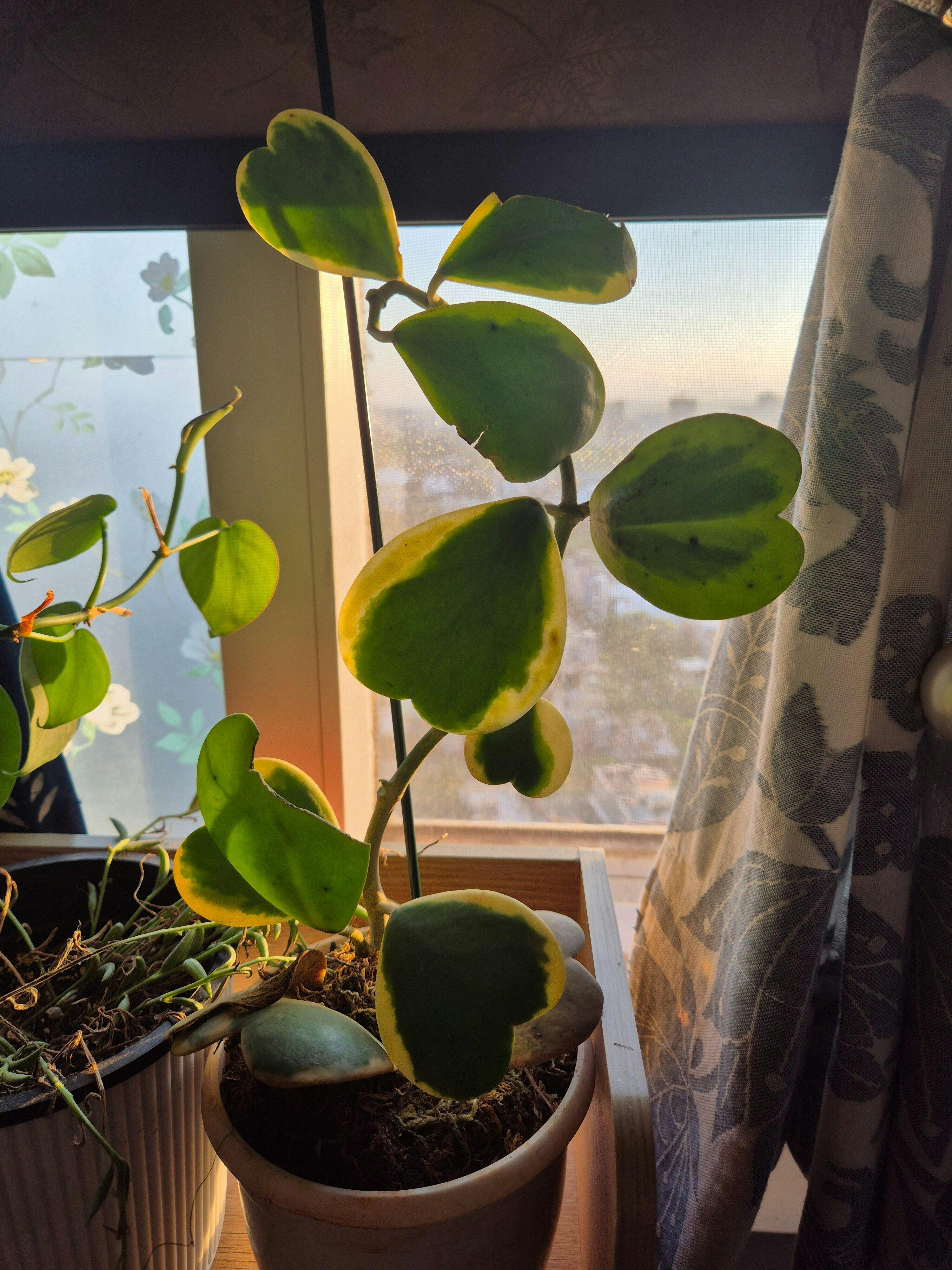
This listing is for a rooted, multi-node variegated Hoya Kerrii plant — a complete plant with stems, nodes, and the ability to grow trailing vines. This is important to know because Hoya Kerrii is widely sold elsewhere as a single heart-shaped leaf in a small pot, which, without a stem node, will never produce new leaves or vines. What you are getting here is the real thing: a plant that will grow, trail, and eventually bloom.
The Variegated Hoya Kerrii — known as the Heart Leaf Hoya, Sweetheart Hoya, or Valentine Hoya — is one of the most charming and distinctive plants in cultivation. A native of the tropical forests of Southeast Asia, from Vietnam and Thailand to parts of Indonesia, it is instantly recognisable by its perfectly heart-shaped, thick, semi-succulent leaves — waxy, glossy, and deeply satisfying to touch. In the variegated form, each heart-shaped leaf carries a rich deep green centre framed by a broad creamy-white to pale yellow margin, creating a two-tone effect that is both elegant and immediately eye-catching against any surface.
Given time and proper care, this is a slow-growing, long-lived vining plant that can eventually trail or climb to several metres — a mass of heart-shaped leaves cascading from a shelf or winding along a trellis. Mature plants produce clusters of up to 25 small, star-shaped, porcelain-textured flowers in pale pink or white with deeper pink-red centres — exquisite, waxy blooms with a sweet fragrance that drips nectar. It is pet-safe, forgiving of occasional neglect, adaptable to a range of indoor conditions, and one of the most meaningful plants you can give or receive. Every single leaf is shaped like a heart. Every one.
💡 About the Variegation — Light, Reversion & What to Expect
The creamy-white leaf margins contain little chlorophyll, which makes the variegated form slower-growing than the plain green variety and more dependent on bright light. In low light, new leaves may emerge with less cream and more green as the plant compensates for reduced photosynthesis. Occasional fully-green leaves appearing on an otherwise variegated plant are normal — they can be left or removed depending on preference. The variegation cannot be permanently reversed but its intensity is influenced by light quality.
Light
▾
Bright indirect light — this is the most important factor for both growth rate and variegation vibrancy. An east or west-facing window is ideal, where the plant receives gentle direct morning or afternoon sun without harsh midday exposure. A spot within 1–1.5 m of a south-facing window with a sheer curtain works well. The variegated form needs more light than the plain green to maintain vivid cream margins and grow at a reasonable pace. A grow light is a highly effective supplement in lower-light homes.
Watering
▾
Soak and dry — allow the soil to dry out almost completely between waterings, then water thoroughly until it drains freely from the bottom. The thick, semi-succulent leaves store water, making this plant very tolerant of under-watering and very sensitive to over-watering. In summer, check every 10–14 days. In winter, once every 3–4 weeks is often sufficient. Never allow the plant to sit in standing water. Overwatering is by far the most common mistake — when in doubt, wait.
Humidity
▾
Adaptable — tolerates average household humidity (40–60%) comfortably, more so than many aroids. Does not need a humidifier to thrive. In very dry conditions (below 30%), occasional misting or a pebble tray with water is helpful. Outdoors in India's naturally humid climate it thrives without intervention. Good air circulation helps prevent fungal issues, particularly in high-humidity environments.
Growing Media
▾
Extremely well-draining mix — drainage is everything for this plant. Mix 40% quality potting soil, 30% perlite, 20% orchid bark or coarse bark chips, and 10% coco coir or peat. pH: 6.0–7.0. Hoya Kerrii is epiphytic in nature, meaning it grows on trees in the wild and prefers an airy, open mix that dries quickly. Avoid dense or moisture-retentive mixes entirely. Repot every 2–3 years or when roots emerge from the drainage holes — this plant doesn't mind being moderately pot-bound. A snug pot can actually encourage flowering in mature plants.
Feeding & Fertilization
▾
Light feeder — feed every 4–6 weeks during spring and summer with a balanced liquid fertilizer (20-20-20) diluted to half strength. Do not feed in autumn or winter. Avoid over-fertilizing, which causes salt build-up and root damage. Flush the soil with plain water every 2–3 months to prevent accumulation. The variegated form grows more slowly than the green and needs even less fertilizer — once monthly at quarter strength is sufficient for young plants.
🌸 About Flowering — Worth the Wait, Worth Knowing
Hoya Kerrii flowers are among the most exquisite in the houseplant world — clusters of up to 25 small, perfectly formed, porcelain-textured star-shaped blooms in pale pink-cream with deep pink-red centres, producing a sweet nectar fragrance. However, flowering requires a well-established, mature vine of several years and consistently bright light. Do not expect flowers for at least 2–3 years. Keeping the plant slightly root-bound and providing maximum bright light are the two most reliable ways to encourage eventual flowering. Do not remove the spent flower stalks — Hoya blooms again from the same peduncles (flower spurs) each season.
✂️ Pruning, Training & Propagation
Pinch back stems lightly every 6 months to encourage bushier growth — cut just above a node. For propagation, take a stem cutting with at least 2–3 nodes and root in water or moist sphagnum moss. Leaf cuttings alone (without a stem and node) will root but will never produce new leaves or vines — always include stem tissue when propagating. Roots develop slowly over 4–8 weeks. Train the vines along a trellis, moss pole, or bamboo hoop for a structured look, or allow them to trail freely from a hanging basket or high shelf for a cascading effect.
⚠️ Common Issues & Quick Fixes
Not Growing / Extremely Slow Growth
▾
This plant is genuinely slow — the variegated form more so than most. In ideal conditions expect 1–2 new leaves per month in summer; in winter, growth may pause entirely. Insufficient light is the most common cause of slower-than-normal growth — move to a brighter spot. Feed monthly during spring and summer. Patience is essential with this plant; it rewards the long-term owner.
Wrinkled or Shrivelled Leaves
▾
Underwatering — the semi-succulent leaves shrivel as their water reserves deplete. Water thoroughly and the leaves will plump back up within 24–48 hours. If the soil is moist and leaves are still shrivelling, suspect root rot — unpot and inspect the roots.
Yellow Leaves
▾
Overwatering is the most likely cause — allow the soil to dry out much more between waterings and ensure drainage is adequate. A single older leaf yellowing occasionally is normal. Widespread yellowing with soft, mushy stems or roots indicates root rot; unpot, remove all soft or blackened roots, repot in fresh very well-draining mix, and dramatically reduce watering frequency.
Brown Crispy Leaf Tips or Edges
▾
Salt build-up in the soil from fertilizer or hard water is the most common cause. Flush the soil thoroughly with plain water and reduce fertilizer frequency. Very dry air can also cause tip browning — a pebble tray or occasional misting helps. Existing brown tips are permanent; trim neatly with clean scissors.
Mealybugs or Aphids
▾
Inspect where the petioles meet the stem and the leaf undersides — both are common hiding spots. Sticky residue on leaves or nearby surfaces is an early indicator. Wipe down with a damp cloth, then spray thoroughly with diluted neem oil or insecticidal soap every 7–10 days until resolved. Regular leaf-wiping is the best prevention.
Variegation Reducing / More Green Leaves Appearing
▾
Insufficient light — the plant is producing more chlorophyll to compensate. Move to a brighter spot. Occasional fully-green leaves are normal on a variegated plant and do not indicate permanent reversion. If desired, remove all-green leaves to encourage more variegated new growth. A grow light at 12–14 hours daily is highly effective for maintaining vivid cream margins.
📋 Quick Plant Profile
| Botanical Name | Hoya kerrii Craib (variegated form) |
| Common Names | Variegated Heart Leaf Hoya, Sweetheart Hoya, Valentine Hoya, Wax Heart Plant |
| Family | Apocynaceae |
| Origin | Southeast Asia — Vietnam, Thailand, Laos, Cambodia, Indonesia |
| Plant Type | Epiphytic semi-succulent trailing/climbing vine; long-lived |
| Leaf Description | Perfectly heart-shaped; thick, waxy, semi-succulent; deep green centre with creamy-white to pale yellow margin |
| Flowers | Pale pink-cream, star-shaped, porcelain-textured; up to 25 per cluster; sweet fragrance; mature plants only |
| Light | Bright indirect; tolerates gentle direct morning or afternoon sun; grow light effective |
| Watering | Soak and dry — allow to nearly dry completely between waterings |
| Humidity | Adaptable — tolerates 40–60% household humidity without humidifier |
| Soil pH | 6.0–7.0; extremely well-draining epiphytic mix essential |
| Temperature | 18°C–29°C ideal; growth slows below 15°C; no frost |
| Mature Vine Length | Up to 3–4 m with time; very slow-growing |
| Growth Rate | Slow — 1–2 leaves per month in ideal conditions; near dormant in winter |
| Pet Safety | ✅ Pet-safe — non-toxic to cats and dogs |
| Repotting | Every 2–3 years; tolerates being moderately pot-bound; snug pot encourages flowering |
| Ideal For | Hanging Baskets, Shelves, Trellises, Gifts, Collectors, Pet-Friendly Homes |
| Care Level | Easy — forgiving, long-lived, and genuinely rewarding |