


J
Jegfluxe Loved it not a leaf damged
E
Elle Got healthy and lovely plants!
U
Upasana Chattaraj Thank you for one of the best additions to my SOH collection! Loved it!!

Variegated Strings of Hearts (Ceropegia Woodii)

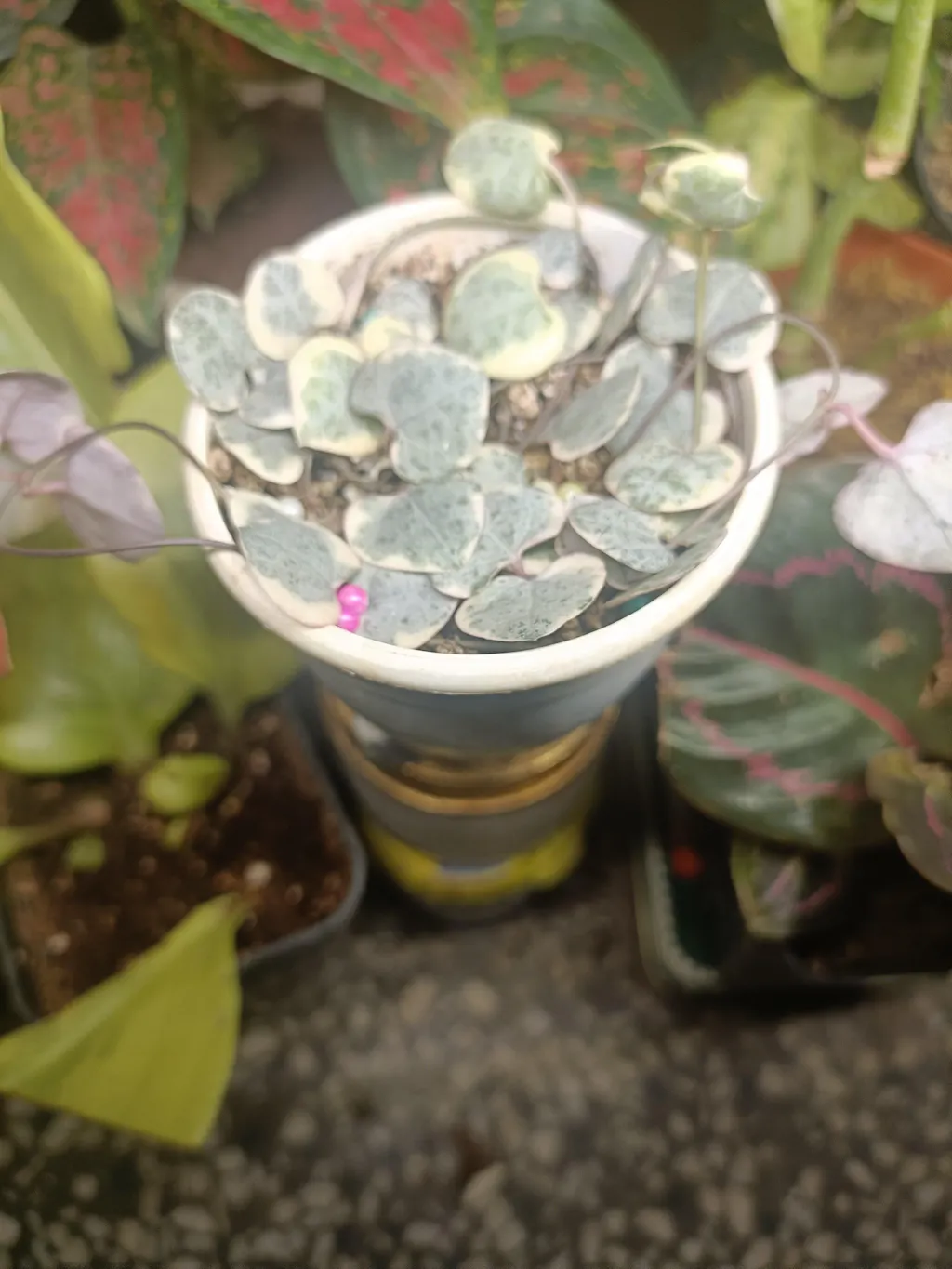
The Variegated String of Hearts (Ceropegia woodii f. variegata) is undeniably one of the most romantic and highly sought-after trailing plants in the indoor gardening world. Native to South Africa, Swaziland, and Zimbabwe, this delicate-looking succulent vine produces perfectly heart-shaped leaves strung along wire-thin, purple cascading stems. What sets this variegated cultivar apart from the classic green version is its breathtaking wash of color: the leaves are beautifully marbled with creamy white, silver, and sage green, with edges that flush a brilliant, vibrant pink when exposed to bright light.
Despite its fragile, beaded-curtain appearance, the String of Hearts is a tough, drought-tolerant succulent at its core. It develops small, bead-like tubers (called bulbils) along its vines and at the roots to store water for long periods. With a graceful, cascading growth habit that can easily reach several feet in length, it is the absolute perfect candidate for a hanging basket or perched high on a well-lit bookshelf.
Bright light is non-negotiable for the variegated variety. It needs plenty of bright, indirect sunlight, and highly benefits from 2-4 hours of direct sun (morning or late afternoon) to maintain its striking cream and pink variegation. Crucially, make sure the light hits the top of the pot, not just the trailing vines, to prevent the crown from going bald.
This is a semi-succulent that stores water in its leaves and bulbils. Allow the potting mix to dry out 100% between waterings. When it is time to water, soak it thoroughly until water drains freely from the bottom holes. Bottom-watering is a fantastic method for this plant to ensure the fragile stems on the soil surface do not stay overly wet and rot.
It prefers a dry, arid environment and does perfectly well in average household humidity. Do not mist the leaves! Misting provides no benefit to this succulent vine and can actually lead to fungal issues or leaf rot if water gets trapped in the dense foliage near the soil.
It requires an exceptionally well-draining, gritty soil mix. Use a premium cactus and succulent mix, and amend it further with a generous amount of coarse perlite or pumice (aim for a 50/50 ratio of organic to inorganic matter). Terracotta pots are highly recommended, as they wick away excess moisture and help the soil dry out faster.
String of Hearts are very light feeders. Use a balanced, water-soluble fertilizer or a specialized succulent fertilizer diluted to half-strength just once a month during the active growing season (spring and summer). Withhold fertilizer entirely during the winter.
This happens when the plant is placed too high up (like on a top shelf) and the light is only hitting the trailing vines, leaving the top of the pot in shadow. The plant needs light directly on the soil surface to push out new growth. Lower the plant or adjust its position. To quickly fix a bald top, you can take a trailing vine, loop it back up, and pin the nodes directly onto the soil to root and fill out the pot.
This is the classic sign of overwatering and root rot. The delicate vines resting on the wet soil are rotting. Immediately stop watering, allow the plant to dry out completely, and ensure it is receiving enough light. If the soil is very dense, you may need to repot into a chunkier succulent mix.
The plant is not receiving enough light. The beautiful pink flushing is a direct response to bright light exposure. Move the plant closer to a window where it can receive a few hours of direct morning or late afternoon sun to bring the color back.
| Botanical Name | Ceropegia woodii f. variegata |
| Common Names | Variegated String of Hearts, Sweetheart Vine, Rosary Vine |
| Family | Apocynaceae (Dogbane/Milkweed family) |
| Origin | South Africa, Swaziland, and Zimbabwe |
| Leaf Detail | Fleshy, heart-shaped leaves marbled with silver, cream, and green; edges flush pink in sun. |
| Growth Habit | Trailing, cascading evergreen succulent vine. Can grow several feet long. |
| Watering Rule | Succulent care. Allow soil to dry 100% before watering. Use the "Taco Test." |
| Light | Bright indirect light with some direct sun. Crucial for pink variegation and crown growth. |
| Humidity | Low to average household humidity. Do not mist. |
| Temperature | 18°C–29°C. Sensitive to cold; keep above 15°C. |
| Toxicity | Non-toxic and 100% pet-safe for cats and dogs! |
| Ideal For | Hanging baskets, high shelves, trailing displays, succulent lovers. |
| Care Level | Easy to Intermediate — Extremely resilient to drought, but highly sensitive to overwatering. |