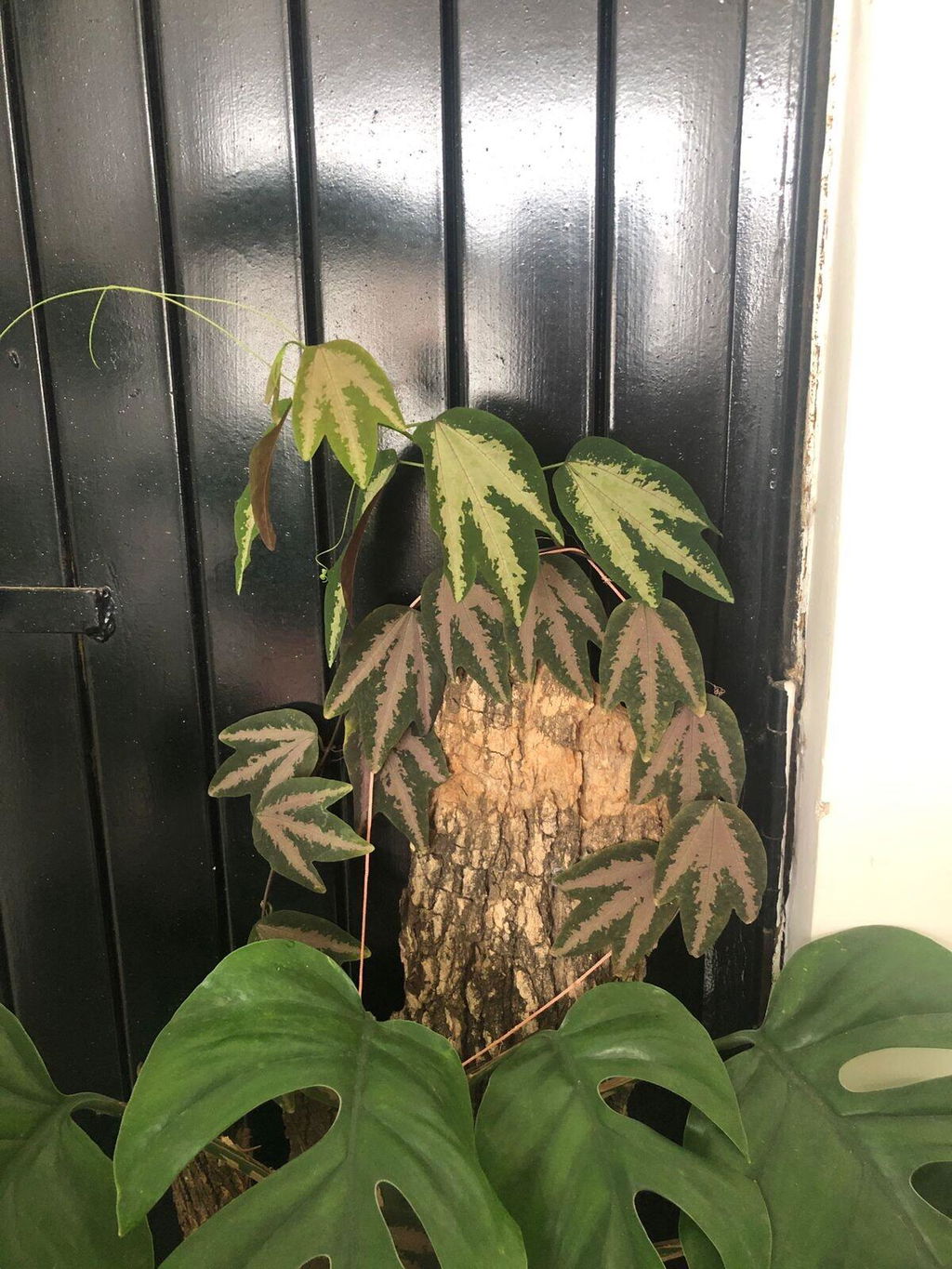
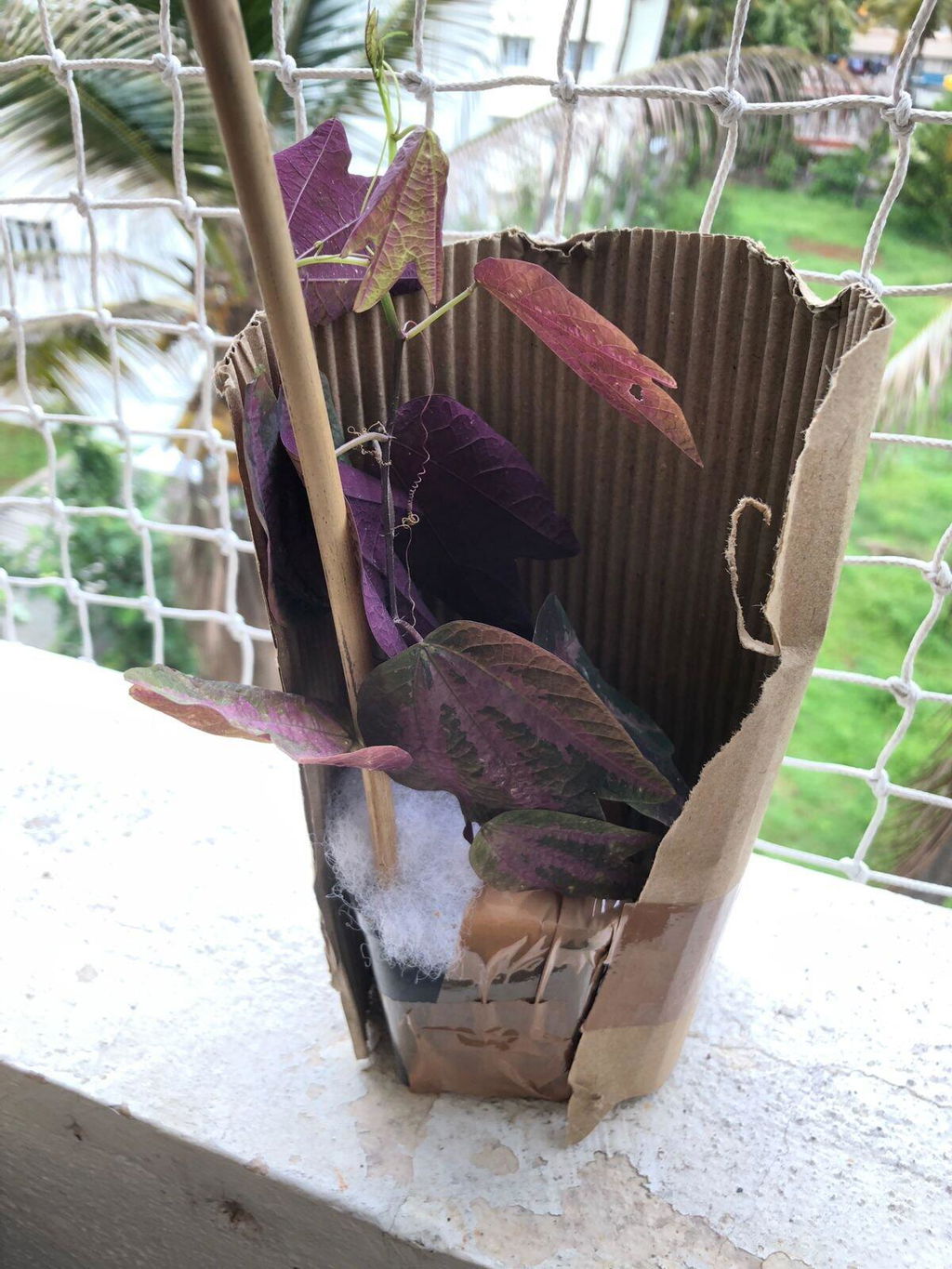
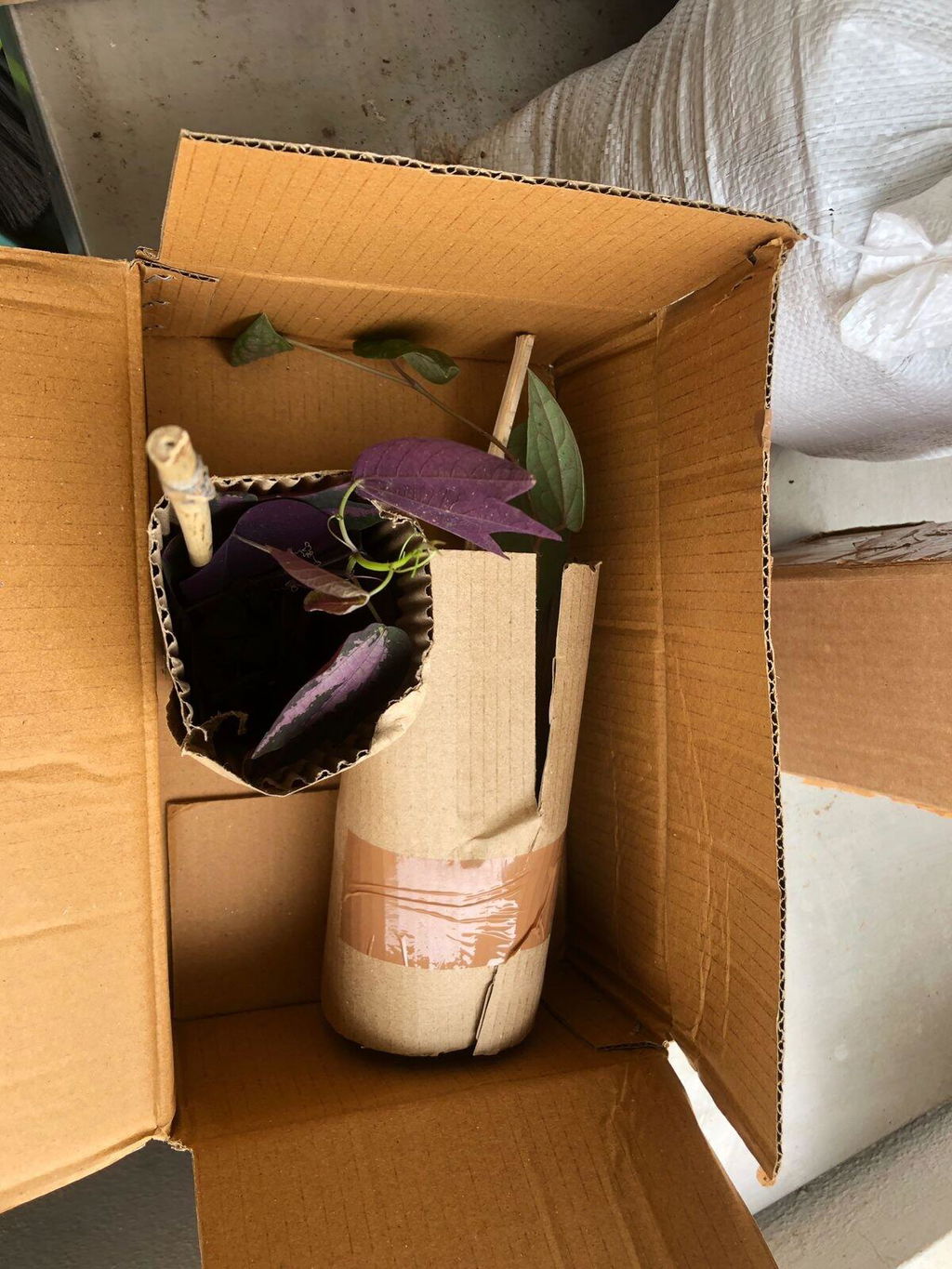
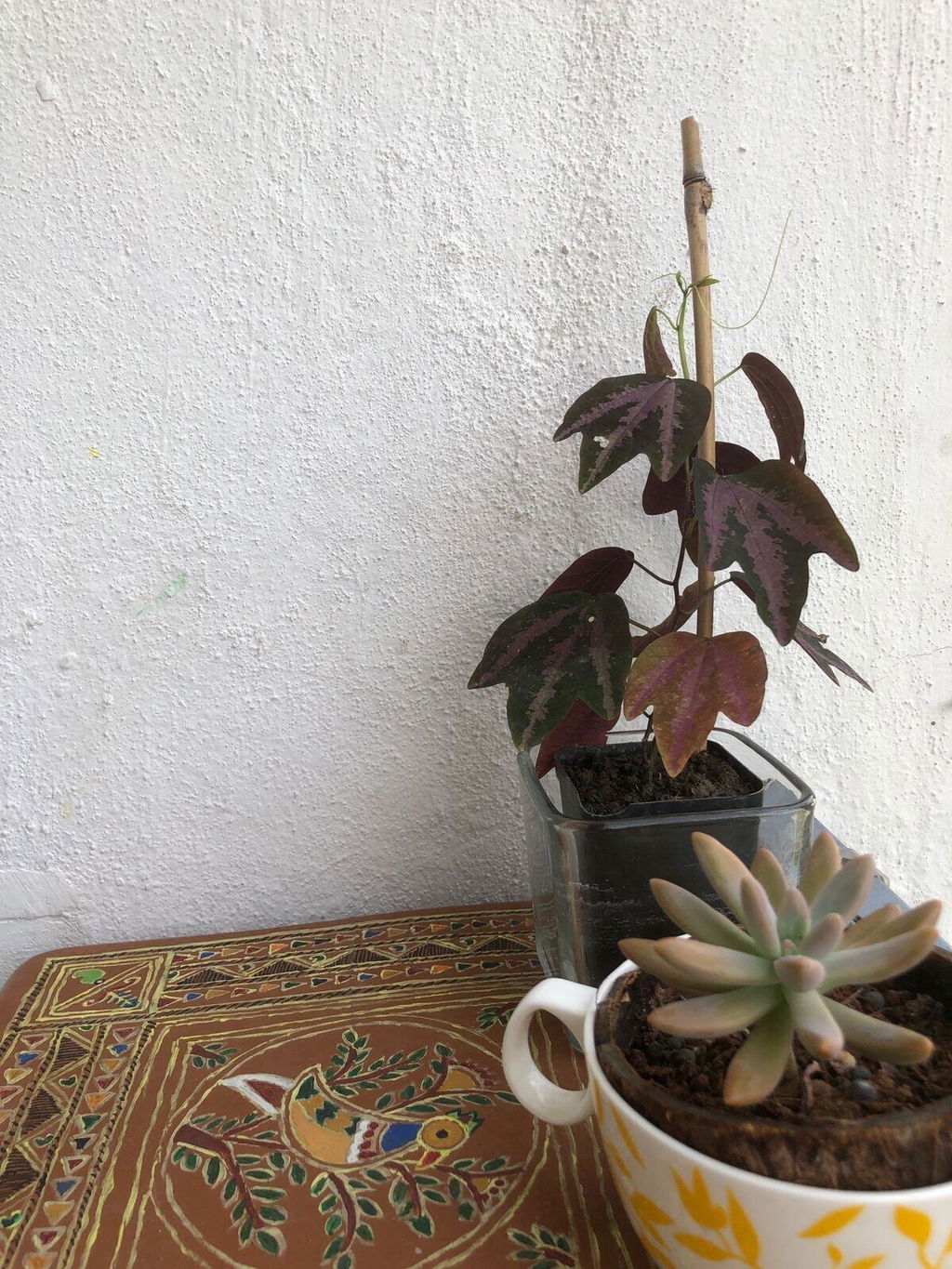
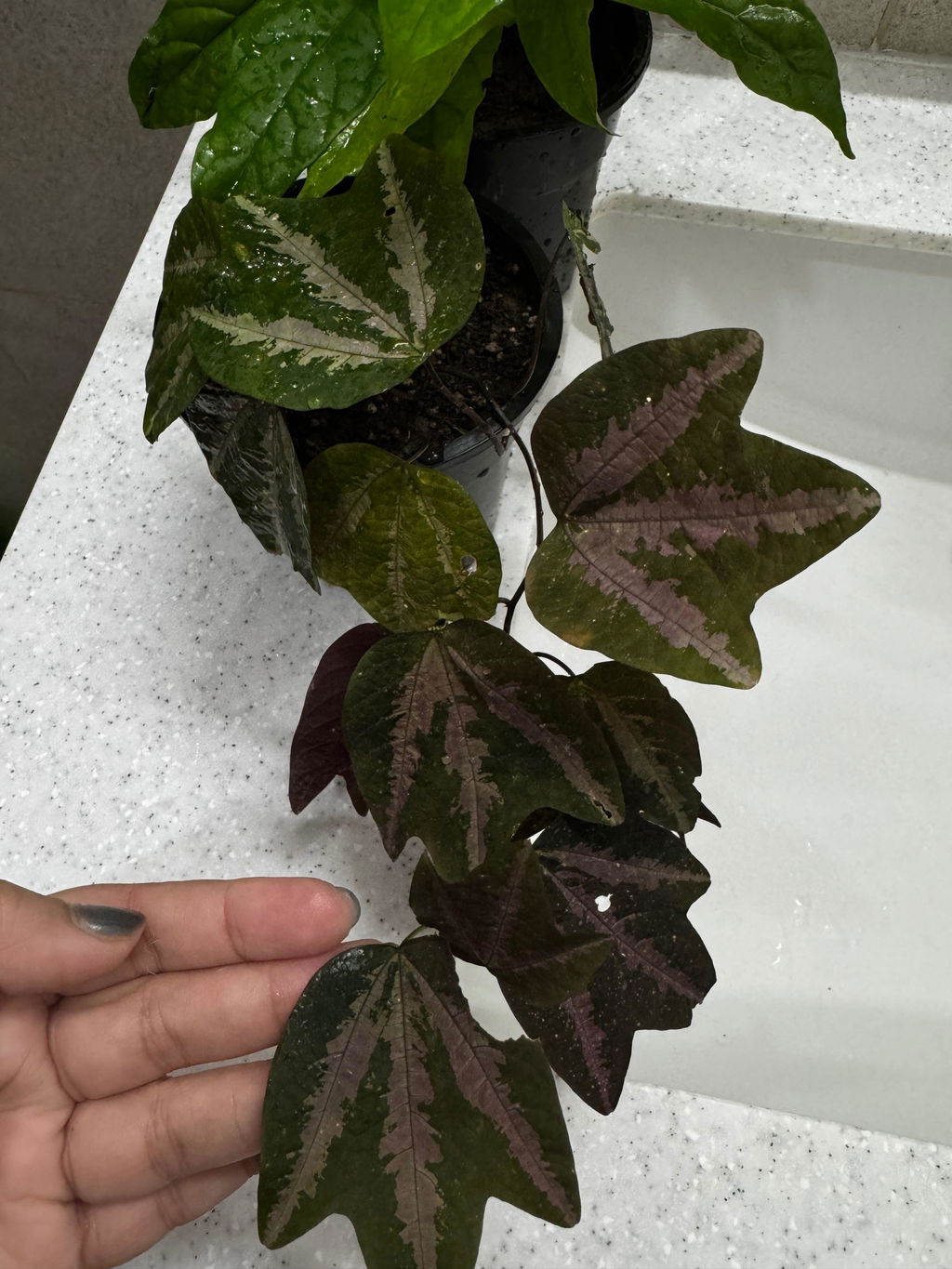
The Passiflora Trifasciata, also known as the Three-Banded Passion Flower, is a magnificent and unusual climber native to the tropical regions of South America. While most passion vines are grown specifically for their large, showy flowers, the Trifasciata completely flips the script—it is prized almost exclusively for its breathtaking, prehistoric-looking foliage.
The leaves are distinctly three-lobed (like a bat's wing or a dinosaur footprint) and feature an incredibly striking variegation pattern. A bold, luminous band of silvery-pink to pale green runs down the center of each lobe, contrasting sharply against a dark, mottled olive-green background. Flip the leaves over, and you'll be greeted by a vibrant, deep burgundy-purple underside. It is a fast-growing, tendril-climbing vine that adds a wild, exotic touch to any indoor jungle.
Foliage Over Flowers
Unlike the massive, intricate purple and blue blooms of other Passiflora species, the Trifasciata produces small, delicate, pale greenish-white or yellowish flowers that are mildly fragrant. While they are a lovely bonus, the true spectacle of this plant is undoubtedly its wildly patterned, tricolored leaves!
Completely Pet-Safe!
You can let this vine climb and cascade freely. The Passiflora Trifasciata is completely non-toxic and entirely safe to grow around cats, dogs, and children.
Give It Something to Grab!
This plant is a true climber that utilizes tiny, curly tendrils to pull itself upward. To keep it happy and encourage it to produce large, beautifully variegated leaves, you must provide it with a trellis, a moss pole, or a wire hoop to climb. If left to trail without support, the leaves will stay small and the vines will quickly become a tangled mess.
☀️Light
▾
Bright, indirect light is essential for maintaining the striking three-banded variegation and the deep burgundy undersides. An east-facing window is ideal. However, you must protect it from harsh, scorching afternoon sun. Too much direct sunlight will wash out the beautiful pink and silver banding, turning the leaves a faded, pale green.
💧Watering
▾
Passion vines love consistent moisture. Allow only the top 1 to 2 inches of soil to dry out before watering thoroughly. Never let the root ball dry out completely, as the thin leaves will quickly crisp up and drop off. Ensure your pot has drainage holes so the plant doesn't sit in standing water, which can lead to root rot.
💦Humidity
▾
Native to tropical rainforests, this plant thrives in moderate to high humidity (50% to 70%+). If your indoor air is very dry, especially during winter or in air-conditioned rooms, the delicate tips of the leaves may turn brown. Group it with other plants or use a humidifier to keep the foliage supple and vibrant.
🌿Growing Media
▾
A rich, well-draining potting mix is perfect. Combine a high-quality indoor soil with a generous amount of perlite to ensure excess water drains away quickly while still retaining enough moisture to keep the roots happy.
🌾Feeding
▾
As a fast-growing vine, it is a relatively heavy feeder during the spring and summer. Feed it every two weeks with a balanced, water-soluble houseplant fertilizer diluted to half strength. Pause feeding in the winter when the plant's growth naturally slows down.
Common Issues & Quick Fixes
Fading Variegation (Losing the Stripes)
▾
If the striking pink and silver bands are disappearing and the leaves are looking dull and mostly green, the plant is likely getting either too much direct sunlight (which washes out the color) or far too little light. Adjust its position to ensure it receives bright, filtered ambient light.
Crispy, Brown Leaf Edges
▾
This is usually a sign of underwatering or extremely low humidity. Passion vines are sensitive to drying out. Check the soil more frequently and ensure the plant is not placed near a heating vent or cold AC draft.
Spider Mites (Tiny Webs on Leaves)
▾
Passiflora species can occasionally attract spider mites, especially if the air is hot and dry. Look for tiny, dusty webbing underneath the leaves. Treat by showering the foliage with lukewarm water and wiping the leaves down with a neem oil solution.
Quick Plant Profile
▾
| Botanical Name |
Passiflora trifasciata |
| Common Names |
Three-Banded Passion Flower, Macaw Stripe Passion Vine |
| Family |
Passifloraceae (Passion Flower family) |
| Origin |
South America (Peru, Brazil, Ecuador) |
| Leaf Detail |
Three-lobed leaves with striking silver/pink central bands and burgundy undersides. |
| Growth Habit |
Fast-growing climbing vine. Requires a trellis or support. |
| Watering Rule |
Keep evenly moist. Allow only the top 1-2 inches of soil to dry out. |
| Light |
Bright indirect light. Avoid harsh direct sun which fades the variegation. |
| Humidity |
Moderate to high (50%+). Needs humidity to prevent crispy edges. |
| Temperature |
18°C–29°C. Thrives in warm environments. |
| Toxicity |
Non-toxic and 100% pet-safe for cats and dogs! |
| Ideal For |
Trellis displays, indoor climbing plants, terrariums, pet-friendly homes. |
| Care Level |
Intermediate — Needs consistent moisture, a climbing structure, and good light. |