Skip to product information


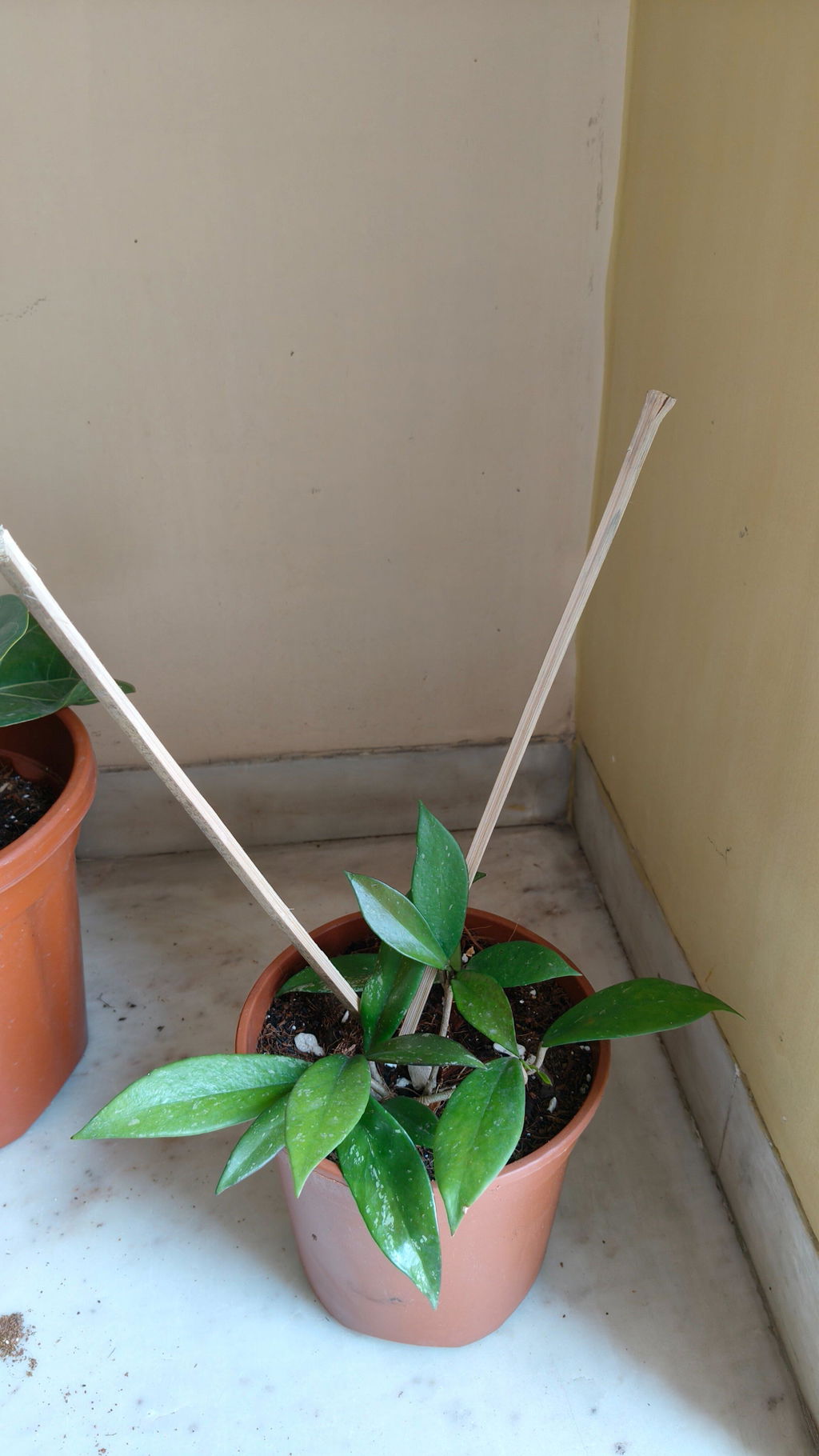
Scindapsus Treubii Black
Regular price
₹ 1,599.00
Sale price
₹ 599.00
The Scindapsus Treubii Dark Form is one of those rare plants that stops people mid-step — not because of elaborate patterning or dramatic colour change, but because of the sheer depth and quality of its near-black foliage. The genus name Scindapsus comes from the Greek skindapsos, meaning "climber of tree trunks," and the species name treubii honours Melchior Treub — the Dutch botanist who directed the legendary Buitenzorg Botanic Gardens in Java, one of the most influential tropical botanical institutions in history. This is a plant named after a man who dedicated his life to understanding tropical flora, and it repays the honour with foliage unlike almost anything else in cultivation: thick, leathery, lanceolate blades of deep green so saturated it appears nearly black — glossy on the upper surface with a beautiful contrast of matte silver-grey beneath. Native to the rainforests of Peninsular Malaysia, Borneo, and Java, where it spends its life climbing tree trunks in the humid understorey, it is one of the most genuinely rare and collectible vining aroids available — slow, deliberate, and completely extraordinary.
The Colour Paradox — Why Dark Leaves Need More Light, Not Less
The near-black colour of the Dark Form's leaves is caused by an exceptionally dense concentration of chloroplasts — the cells that contain chlorophyll. This is a biological response to maximise light capture, which means the darker the leaf, the more light the plant is actually programmed to seek. Contrary to intuition, this plant needs more light than you might expect from such dark foliage — not less. In insufficient light, growth slows dramatically, new leaves emerge smaller, and the vine produces long bare stems reaching toward any light source. Bright indirect light is not optional for this plant; it is the single most important factor in keeping it healthy and growing.
Climbing Produces Larger Leaves — Moss Pole Recommended
Like all Scindapsus, the Dark Form produces noticeably larger, more mature leaves when it is given a structure to climb. A moss pole, coco coir totem, or wooden plank with good moisture retention allows the aerial roots to grip and anchor, triggering the plant's climbing growth mode. Trailing or hanging produces smaller, more juvenile leaves indefinitely. If you want to see the Dark Form at its most impressive — leaves approaching 15–20 cm with full depth of colour — give it something to climb and keep the pole moist so the aerial roots can attach.
Light
▾
Bright indirect light — this is non-negotiable and the most common care mistake with this plant. An east or north-facing window that receives bright, filtered light for several hours is ideal. The near-black foliage demands good light to fuel its dense chloroplast structure — in lower light growth halts and the vine produces long, leafless stems reaching toward any light source. No direct harsh afternoon sun — it scorches the waxy leaf surface. A grow light at 12–14 hours is excellent and produces the most consistent, well-coloured new growth for indoor growing.
Watering
▾
The watering balance for the Dark Form is more precise than most aroids — both overwatering and underwatering cause root damage. Allow the top 3–5 cm to dry before watering thoroughly, but do not allow the root zone to become bone dry for extended periods — the roots die back from the tips when severely dehydrated, and subsequent watering then sits on dead roots and causes rot. Water thoroughly with filtered or room-temperature water; empty the saucer immediately after. Terracotta pots assist the drying cycle. Reduce frequency in winter but maintain consistent, moderate moisture. Check weekly and water when the top layer is clearly — but not excessively — dry.
Humidity
▾
50–60% preferred — more adaptable than many collector aroids. The thick, waxy leaf surface reduces transpiration and the plant tolerates average Indian indoor humidity without significant stress. A humidifier is beneficial for optimal growth but not essential. Keep away from cold AC drafts and direct heating vents. Do not mist directly onto the leaves — water sitting on the waxy surface in poor air circulation can encourage fungal spotting. India's tropical climate is naturally adequate for outdoor growing in shade.
Growing Media
▾
Chunky, well-aerated mix with excellent drainage — equal parts quality potting mix, orchid bark, perlite, and horticultural charcoal is excellent. pH 5.5–6.5. The mix must drain immediately and completely; the Dark Form's roots are susceptible to rot in any persistently moist conditions. Terracotta pot with drainage holes strongly recommended — the porous walls assist evaporation between waterings. Repot every 2–3 years in spring; the plant is slow-growing and prefers to be slightly snug rather than over-potted. A moss pole or coco totem from potting encourages climbing growth and larger leaves.
Feeding
▾
Balanced liquid fertilizer at half strength every 3–4 weeks during the growing season (spring through early autumn). The slow growth rate means the Dark Form does not consume nutrients rapidly — consistent but light feeding is more beneficial than heavy doses. Apply only to moist soil. Flush every 3 months to prevent mineral salt build-up. Stop feeding in winter. Avoid high-nitrogen formulas — they push soft growth that is less in keeping with the plant's characteristic thick, leathery leaf structure.
Common Issues & Quick Fixes
Long Bare Stems with No New Leaves
▾
Insufficient light — the most distinctive and most common Dark Form distress signal. The vine produces leafless stems reaching toward any available light source when its light demands are not met. Move immediately to a significantly brighter position or add a grow light. Trim the bare stems back to a healthy node with leaves; new growth in better light will be compact and well-leaved.
Root Rot — Yellowing, Mushy Stem Base
▾
Overwatering or persistently wet soil — the primary killer. Unpot immediately, trim all mushy roots and stem base tissue, allow to dry for several hours, repot in fresh completely dry chunky mix, and do not water for 10–14 days. Improve drainage with terracotta and more perlite in the mix. Going forward: allow top 3–5 cm to dry clearly before watering — but do not allow to dry completely to bone dry for extended periods either.
Leaves Staying Small and Pale
▾
Insufficient light combined with no climbing support. Move to a brighter position and provide a moss pole or coco totem — climbing growth triggers progressively larger, more deeply coloured leaves. Small, pale leaves are a reliable indicator of both inadequate light and a trailing (rather than climbing) growth mode.
Brown or Crispy Leaf Edges
▾
Low humidity, cold AC draft, or tap water mineral build-up. Move away from any drafts, switch to filtered water, flush the soil every 3 months, and boost humidity modestly. Existing brown edges are permanent — trim neatly; new growth in improved conditions will be clean and well-defined.
Spider Mites or Thrips
▾
Inspect leaf surfaces and undersides regularly — the deep colour can make early infestations harder to spot. Spider mites in dry conditions: fine webbing on undersides; boost humidity and treat with neem oil or insecticidal soap every 5–7 days for 3 weeks. Thrips: silver streaking or distorted new growth; spinosad spray every 5–7 days for 4 weeks, quarantine immediately.
Quick Plant Profile
▾
| Botanical Name | Scindapsus treubii 'Dark Form' |
| Name Meaning | Scindapsus = Greek for "climber of tree trunks"; treubii honours Melchior Treub — director of Buitenzorg Botanic Gardens, Java |
| Common Names | Dark Form, Nearly Black, Scindapsus treubii Black |
| Family | Araceae |
| Origin | Peninsular Malaysia, NW Borneo, Java; tropical rainforest understorey; climbs tree trunks |
| Leaf Detail | Lanceolate; thick, waxy, leathery; up to 15–20 cm; near-black deep green upper surface; matte silver-grey underside |
| Colour Note | Near-black colour caused by ultra-dense chloroplast concentration — this plant needs MORE light than its dark colour suggests |
| vs. Moonlight | Same species, same care; Moonlight has silvery-green leaves with lighter central band; Dark Form is near-black and uniform; both are slow growers |
| Growth Habit | Climbing or trailing vine; climbing on a moss pole produces larger, more mature leaves |
| Growth Rate | Very slow — one of the slowest-growing collector aroids; a long-lived, permanent collection piece |
| Watering Rule | Fine balance — top 3–5 cm dry between waterings; do not allow bone-dry roots for extended periods; both extremes cause root damage |
| Light | Bright indirect — non-negotiable; bare stems reaching toward light = insufficient light; grow light excellent |
| Humidity | 50–60%; adaptable; no misting on leaves; humidifier beneficial but not essential |
| Temperature | 18°C–29°C; no cold below 15°C; no cold drafts or AC exposure |
| Propagation | Stem cuttings with at least one node; root in water or moist sphagnum; warm, humid conditions; slow to root |
| Ideal For | Collectors, Dark Foliage Enthusiasts, Moss Pole Displays, Shelves, Statement Vines, Gifting |
| Care Level | Easy to intermediate — bright light, precise watering balance, and a moss pole are the three essentials |
Size Details
1 Scindapsus Treubii Black
Size:
(Plant sizes may vary slightly based on seasonal growth, individual plant characteristics, and current stock.)
Shipping & Delivery
We ship plants within 3-4 days after placing the order if we have them in stock. If not, we’ll email you with the details. Learn More
Replacement
If your plant dies during transit, please contact us with proof, including an unboxing video, and we'll replace it for free. Learn More